Language Dot Map
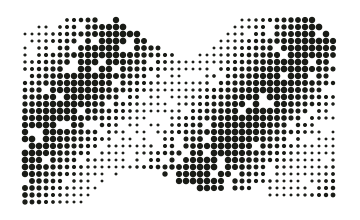
A map of languages spoken at home, drawing on national censuses and related demographic sources.
anita.garden
The Bushwick Institute of Transcendental Computational Humanities (BITCH, or alternately, the Bushwick ITCH) is an independent experimental research collective situated at the intersection of technology and culture. We aim to develop a computational history of consciousness by applying new methods to questions that have traditionally resisted, or overlooked by, quantitative study.
Our practice is experimental, rigorous, and interdisciplinary. We seek to develop new forms of truly transcendental empirical humanistic inquiry: to inform, investigate, and situate socio-historical particularities in the conditions of possibility of knowledge and experience—including the epistemological conditions imposed by our own instruments of observation.
We are based out of a small studio lab in Bushwick, Brooklyn.
How do human populations produce space, and how does the organization of space condition cultural and historical experience?
We are interested in maps not merely as illustrations of existing knowledge, but as arguments about the world: representations whose classifications, omissions, and formal properties warrant critical investigation. We study the geographical distribution of language, religion, ancestry, settlement, and human mobility. Our work brings historical geography and spatial theory into conversation with demographic reconstruction, cartography, and computational modeling.
Explore projects below:
A map of languages spoken at home, drawing on national censuses and related demographic sources.
anita.garden
Reported ancestries across the United States and Canada, represented as a dot map.
anita.garden
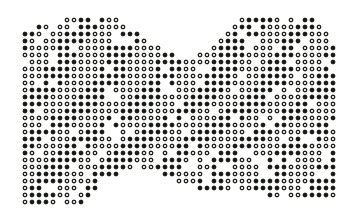
An interactive map of religious populations, with dots, pie charts, and regional views.
anita.garden

City populations through time, with historical estimates and a timeline for exploring their changing scale.
anita.garden
A world map reorganized into regions of equal population.
anita.garden
How are meanings produced, inherited, transformed, and forgotten? What histories are contained within the ordinary operations of language?
Our research approaches language as a historically situated system of conceptual relations. We are particularly interested in metaphor and figuration, semantic transformation, the circulation of literary forms, and the relationship between individual expression and collective linguistic change. Current work includes the construction of a large-scale historical corpus of metaphors in English poetry, the study of figurative innovation and persistence, and the possibility of reconstructing conceptual histories through computational analysis.
Explore projects below:
A corpus reader and network of metaphor in poetry, with paths through poems, poets, and the things they compare.
jean.land
An online learning tool for Ancient Greek.
jean.land
An animated view of a day on the New York subway, using MTA trip estimates and train schedules to follow riders through the system.
anita.garden
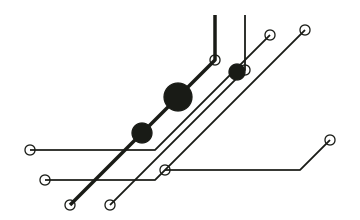
A day of journeys on the London Underground, using weekday ridership and train timetables.
anita.garden
An interactive map of passenger flow along Japan’s rail network.
anita.garden
An interactive map of passengers along Korea’s rail network.
anita.garden
A global map of commercial flight routes and estimated passenger traffic.
anita.garden

A searchable graph of mentorship at the Iowa Writers’ Workshop, tracing relationships between writers from 1931 to 2014.
jean.land
A way to compare New York neighborhoods by rent and commute time, using the journeys that make up a week.
jean.land

A shared, paintable 3D New York City where people can leave their marks on building surfaces.
anita.garden
A game about guessing the political party of members of Congress and state legislators.
jean.land
For research collaborations, dataset partnerships, infrastructure support, event proposals, or funding inquiries, please contact the researchers through jean.land or anita.garden.
We are especially interested in collaborations that lead to original research, reusable methods, and knowledge that can be shared with the public.